

Table of Contents
#2 Pick

Natria Neem Oil Spray
#3 Pick
Bonide Captain Jack’s Deadbug Brew (Spinosad) Concentrate
Bonide Thuricide BT Concentrate
1. Garden Safe Crawling Insect Killer with Diatomaceous Earth: Affordable Dust for Crawling Pests

This Garden Safe product is a 4 lb bag of diatomaceous earth (DE) dust, sold for organic gardening. It is not a spray. You dust a thin layer on plants and on the soil around them, and it kills listed crawling insects by contact.
Diatomaceous earth is made of tiny fossilized algae shells. When insects crawl through it, the fine powder damages their outer coating and they dry out. The label lists crawling pests such as ants, beetles, and mealybugs, along with indoor pests like cockroaches and fleas.
DE works only while it is dry, so reapply after rain or overhead watering. Dust lightly and avoid blooms, since it can also harm bees and other beneficial insects that walk through it. Wear a dust mask when applying, and follow the label for which crops and pests it covers.
Highlights
- Diatomaceous earth formula: Kills by contact rather than with a chemical poison
- For organic gardening: Listed for use outdoors on and around plants
- Large 4 lb bag: Enough for repeated light dustings over a season
Pros
- Low-cost way to control crawling insects
- Suitable for organic gardening
- Works on and around plants
Cons
- Stops working once wet; reapply after rain
- Can harm beneficial insects that contact it
- Not effective against flying pests
2. Natria Neem Oil Spray: Insecticide and Fungicide in One
Natria Neem Oil is a 24 oz ready-to-use spray that works as both an insecticide and a fungicide. The label lists use on vegetables, fruits, and flowers, and it can be used up to the day of harvest.
Neem oil is pressed from the seeds of the neem tree. This spray controls listed soft-bodied pests such as aphids, whiteflies, spider mites, and scale, plus some beetles. It also helps prevent common fungal diseases like powdery mildew, black spot, and botrytis.
The trigger sprayer means there is nothing to mix. Thorough coverage matters, including the undersides of leaves where pests hide. Spray in the early morning or evening, out of direct sun and away from foraging bees.
Highlights
- Two-in-one: Controls listed insects and mites and helps prevent listed plant diseases
- Edible-friendly label: Listed for vegetables and fruits, usable up to the day of harvest
- Ready to use: Trigger sprayer, no mixing
Pros
- Treats pests and fungal diseases with one product
- Labeled for vegetables up to harvest day
- No mixing required
Cons
- Needs thorough, repeated coverage
- 24 oz bottle goes quickly in a large garden
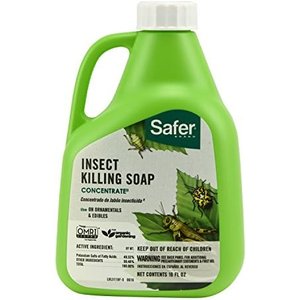
3. Safer Brand 5118-6 Insect Killing Soap Concentrate: Effective in Killing Pests
Safer Brand Insect Killing Soap uses potassium salts of fatty acids, which break down the outer shell of soft-bodied insects and kill them on contact. It works on aphids, mealybugs, whiteflies, leafhoppers, spider mites, and similar pests.
This version is a concentrate you mix with water, which makes it cheaper per gallon than the ready-to-use spray. It is OMRI Listed for organic gardening and can be used on vegetables up to the day of harvest. Spray at the first sign of damage and repeat every 5–7 days while pests are present.
Pros
- OMRI Listed for organic use
- Kills soft-bodied pests on contact
- Usable up to the day of harvest
- Concentrate is economical
Cons
- Must contact the insect to work
- Little effect on hard-bodied beetles
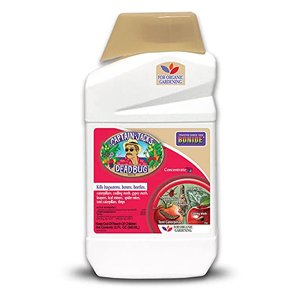
4. Bonide Captain Jack’s Deadbug Brew: Spinosad for Caterpillars and Beetles
Captain Jack’s Deadbug Brew is a spinosad concentrate approved for organic gardening. It controls chewing pests like caterpillars, loopers, leaf miners, some beetles, thrips, and spider mites.
Spinosad comes from a naturally occurring soil bacterium, and it is widely used on organic produce. The label lists a broad range of food crops, including fruiting vegetables like tomatoes and peppers, cucurbits, cole crops, leafy greens, and tuberous vegetables.
This is a concentrate, so you mix it with water in a trigger, pump, or hose-end sprayer. Spinosad can harm bees while the spray is still wet, so apply it in the evening, avoid open blooms, and follow the label for how often you can reapply and how long to wait before harvest.
Highlights
- Active ingredient: Spinosad, approved for organic gardening
- Wide crop list: Fruiting vegetables, cucurbits, cole crops, leafy and tuberous vegetables, and fruit
- Concentrate: Mix with water for use in common sprayers
Pros
- Effective on caterpillars and other chewing pests
- Labeled for many vegetable crops
- Concentrate makes a lot of spray
Cons
- Must be mixed before use
- Avoid spraying open blooms while bees are active
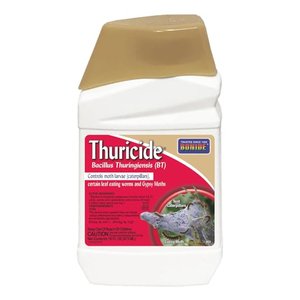
5. Bonide Thuricide BT: Targeted Control for Caterpillars and Hornworms
Bonide Thuricide is a Bacillus thuringiensis (Bt) concentrate that targets caterpillars and worms, such as cabbage loopers and tomato hornworms. It is approved for organic gardening.
Bt only affects caterpillars that eat treated leaves. After feeding, they stop eating, so it is a good fit when worms are the problem. The label lists crops such as broccoli, cauliflower, kale, cabbage, mustard greens, eggplant, peppers, melons, and tomatoes.
According to Bonide, it does not harm birds, earthworms, or beneficial insects like honeybees and ladybugs. Mix it with water and spray when you first see caterpillars. It breaks down in sunlight, so reapply as the label directs.
Highlights
- Active ingredient: Bacillus thuringiensis, approved for organic gardening
- Targeted: Kills caterpillars and worms that eat treated foliage
- Vegetable crops: Listed for brassicas, tomatoes, peppers, eggplant, and melons
Pros
- Very targeted; spares bees and ladybugs
- Labeled for common vegetable crops
- Good value as a concentrate
Cons
- Only controls caterpillars and worms
- Breaks down in sunlight, so it needs reapplying

I’m John, a “seasoned citizen” and an avid gardener. I live in Minnesota, where our weather and growing conditions can be harsh and challenging. Over the years, I have learned a thing or two about being successful in growing things. I have curated these tips, which I think are helpful for the beginning gardener and the seasoned experts. If you have feedback, let me know in the contact form.